
Roughly 25 percent of unplanned industrial downtime is caused by electrical system failures, according to research published by the Electric Power Research Institute (EPRI). At fuel and energy facilities, that figure carries serious weight. A single failure in a distribution substation or motor control center can halt operations, trigger safety shutdowns, and cost hundreds of thousands of dollars in lost output before the root cause is even identified. Understanding how electrical systems support these environments, and how those principles extend to everyday settings, reveals a lot about why consistent maintenance and smart infrastructure design matter at every scale. Resources like residential electrical repairs in Chester County reflect the same core commitment to safe, reliable power that drives best practices in large-scale energy operations.
How Modern Fuel Facilities Depend on Electrical Systems
Fuel and energy facilities are not simply storage and distribution points. They are highly coordinated systems where electrical infrastructure runs in parallel with every mechanical process. From pipeline pumping stations and compressor yards to refinery process units and liquefied natural gas terminals, electricity powers the instrumentation, ventilation, lighting, safety interlocks, and communications that keep these sites operational.
The U.S. Energy Information Administration (EIA) reports that the oil and gas sector consumed over 1.1 quadrillion British thermal units of electricity in a recent annual period, making it one of the most energy-intensive industries in the country. That demand is not incidental. It reflects how deeply electrical systems are woven into every layer of operation. Variable frequency drives regulate pump speeds to reduce energy waste. Programmable logic controllers monitor pressure and temperature in real time. Emergency diesel generators and uninterruptible power supplies stand ready to maintain critical functions if the grid goes dark.
Each of those systems needs to be installed correctly, maintained regularly, and tested for reliability. Failure is rarely dramatic at first. It often starts quietly: a loose connection, a degraded insulation layer, a circuit breaker that trips more often than it should. Left unaddressed, those small faults compound into major hazards.
The Real Cost of Poor Electrical Maintenance
Maintenance gaps in industrial electrical systems do not just create downtime. They create danger. The Occupational Safety and Health Administration (OSHA) consistently lists electrical hazards among the top causes of workplace fatalities in industrial settings. Arc flash incidents, which occur when an electrical fault creates a rapid energy release, can cause severe burns, hearing damage, and fires that spread quickly in fuel-rich environments.
Data from the National Fire Protection Association (NFPA) shows that electrical failures and malfunctions are responsible for approximately 13 percent of industrial structure fires annually. In facilities that handle flammable materials, that percentage translates into catastrophic consequences when the right safeguards are not in place. The NFPA 70E standard, which is the code governing electrical safety in the workplace, exists precisely because these risks are predictable and preventable.
The broader challenge is that electrical infrastructure in large facilities is often aging. Many of the substations and distribution panels serving industrial energy sites in the United States were installed decades ago, before modern safety standards or current load demands were anticipated. EPRI has noted that transformer failures at aging facilities have increased as assets push past their intended service lifespans, and that proactive replacement programs consistently outperform reactive repair strategies in both cost and safety outcomes.
What Industrial Projects Teach About Electrical Planning
Large-scale energy projects offer a useful lens for understanding what sound electrical infrastructure actually looks like in practice. When the American Society of Civil Engineers (ASCE) evaluated energy infrastructure resilience in its Infrastructure Report Card, it highlighted redundancy, load management, and modernization investment as the three pillars of a reliable system. Those same pillars apply whether you are designing the electrical layout for a natural gas processing plant or planning a panel upgrade for a residential property.
Redundancy means building systems that do not have single points of failure. In fuel facilities, this takes the form of backup generators, dual-feed substations, and automatic transfer switches that shift load to an alternate source without operator intervention. The underlying principle is simple: critical functions should never rely on a single path of power delivery.
Load management means understanding what your system actually carries versus what it was designed to carry. Industrial energy sites conduct regular power quality studies to identify harmonic distortion, voltage sags, and overloaded circuits before they cause equipment damage or tripped breakers. This is not a luxury. It is routine engineering practice.
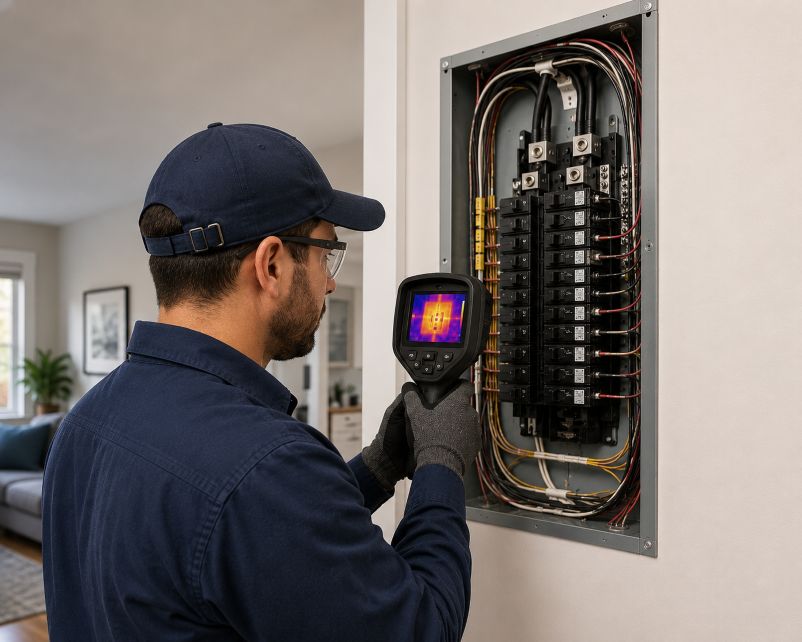
Modernization means acknowledging when an older system has reached its limit. Thermal imaging cameras, power monitoring software, and scheduled infrared inspections are now standard tools on well-run industrial sites because they catch problems that visual checks miss. Experts at the Institute of Electrical and Electronics Engineers (IEEE) note that predictive maintenance programs using these techniques can reduce unexpected failures by as much as 30 percent.
From Industrial Sites to Everyday Homes
The principles that protect billion-dollar energy facilities are directly relevant to how homeowners and small property owners think about their own electrical systems. The scale changes, but the logic does not. Overloaded circuits, outdated panels, deteriorating wiring, and deferred repairs all carry real risk, regardless of whether the building is a refinery or a ranch house.
In Chester County, Pennsylvania, many residential properties were built during periods when electrical demand was a fraction of what modern households now place on their systems. Air conditioning, electric vehicle chargers, home offices loaded with electronics, and induction cooking ranges have dramatically increased the load that older wiring must carry. When that load exceeds the system’s design capacity, the risks are the same ones that industrial engineers work hard to eliminate: overheating, arc faults, and fire.
Qualified electrical contractors serving the region bring the same diagnostic thinking to homes that industrial maintenance teams bring to energy sites. They assess load capacity, inspect panel condition, check grounding and bonding, and identify components that are working outside their safe operating range. That kind of methodical evaluation, focused on root causes rather than patching symptoms, is what produces lasting, safe outcomes.
The National Electrical Manufacturers Association (NEMA) estimates that about 51,000 home electrical fires occur in the United States each year, causing roughly 500 deaths and $1.3 billion in property damage. The majority of those fires are preventable with proper installation and maintenance. For homeowners in the region, scheduling periodic inspections and addressing known wiring issues promptly is not overcaution. It is the same rational risk management that energy companies apply at industrial scale.
READ ALSO: Fuel Efficiency | A Key Consideration in Home Inspection Business
Looking Ahead: Efficiency, Safety, and Smarter Systems
The future of both industrial and residential electrical systems is moving toward greater intelligence and integration. Smart meters, automated fault isolation, and grid-interactive devices are already reshaping how energy facilities manage their internal infrastructure. The Department of Energy (DOE) has invested heavily in grid modernization programs designed to reduce outage frequency, improve power quality, and enable real-time monitoring across the transmission and distribution network.
For residential and light commercial properties, smart panels and energy monitoring systems are becoming more accessible and affordable. These tools give homeowners visibility into how their systems perform, flag anomalies before they become failures, and support more efficient energy use. Those are outcomes that mirror what industrial operators have pursued for decades.
The thread connecting a natural gas compressor station and a suburban home in Chester County is not as thin as it might seem. Both depend on electrical systems that were designed at a specific moment in time, both carry loads that grow and shift over the years, and both benefit enormously from proactive attention rather than reactive repair. Whether it is a large-scale facility running around the clock or a household managing daily energy demands, the quality of the underlying wiring, panels, and protective devices determines how safely and efficiently everything else functions.
Reliable power is not a given. It is the result of sound design, regular upkeep, and the willingness to invest in systems before they fail. That lesson, proven repeatedly at the industrial level, applies just as clearly to professional electrical services at the residential scale, including the homes that rely on them every day.