
What Fuel Economics Can Teach Us About Diablo II Item Design
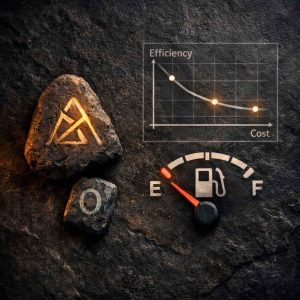 At first glance, fuel economics and Diablo II seem to have nothing in common. One deals with gas prices, efficiency, and long-term planning. The other is about demons, loot, and clicking faster than your friends. But when you look closer, the same forces shape both systems. Scarcity, efficiency, incentives, and trade-offs drive how people behave. And Diablo 2 items reflect these forces with more discipline than many modern games.
Scarcity Is the Foundation of Meaningful Choice
Fuel economics starts with a simple truth. Resources are limited. When fuel is cheap and abundant, people drive bigger cars and worry less about efficiency. When fuel is scarce or expensive, behavior changes. People plan routes, choose smaller vehicles, or look for alternatives.
Good item design works the same way. Items shape player behavior based on what is rare, what is costly, and what is efficient over time. One of Diablo II’s biggest strengths is that it never floods the system with “cheap fuel.” Powerful items are rare, unevenly distributed, and often inconvenient to use. That inconvenience matters.
High-end runewords require multiple rare components. Uniques often come with drawbacks. Even basic needs like resistance force trade-offs. This mirrors fuel markets, where efficiency gains usually come with upfront costs or lifestyle changes. You don’t just get efficiency for free.
Marginal Gains Keep the Endgame Alive
Fuel economists talk a lot about marginal gains. Improving fuel efficiency from 15 to 20 miles per gallon feels significant. Improving from 40 to 45 does not. The cost per unit of improvement goes up.
Diablo II understands this instinctively. Early upgrades feel huge. A rare weapon doubles your damage. A few resistance charms change survival overnight. But as you approach the top end, progress slows. Getting a slightly better roll on a weapon can take weeks.
That slowdown is intentional. It keeps the endgame meaningful instead of disposable. Players are not sprinting toward a finish line. They are deciding whether the next improvement is worth the effort.
Efficiency Should Open Options, Not Erase Effort
Another key lesson from fuel economics is the rebound effect. When efficiency improves, people often consume more. If your car uses less gas, you might drive more.
Many games fall into this trap. They make players stronger and then compensate by throwing more enemies at them. Diablo II mostly avoids that. Power does not automatically scale content upward. Instead, it opens options.
You farm faster. You take riskier routes. You try harder areas. The game does not erase your gains to keep you “balanced.” It lets you decide how to spend them. That sense of agency is critical.
Absolute Scarcity Creates Real Markets
Fuel markets exist because supply and demand fluctuate. Prices signal value. Diablo II’s item economy works for the same reason. Items have real opportunity costs.
Time spent farming one boss is time not spent trading or leveling. Runes function like a hard currency because their drop rates are predictable but low. No vendor prints wealth on demand.
This is why player-to-player trading mattered so much, even before official support systems existed. The economy felt earned because it was constrained.
Hard Limits Prevent Runaway Systems
Fuel economics also teaches restraint. Governments rarely mandate perfect efficiency because systems break when pushed too far. Costs explode. Reliability drops.
In Diablo II, no stat scales infinitely well. Faster hit recovery, attack speed, and cast rate all have breakpoints. Past a certain point, investment is wasted.
This prevents runaway builds and forces diversification. You cannot solve every problem by stacking one number. That single design choice has kept the meta stable for decades.
Maintenance Adds Texture, Not Friction
In fuel systems, durability matters. Engines wear down. Infrastructure needs upkeep. Diablo II reflects this through item durability, repair costs, and its potion economy.
Power requires maintenance. Even the strongest character needs gold, supplies, and attention. This creates friction, but it also creates texture. Without it, the game would flatten into a pure damage simulator.
Designing With Limits Builds Longevity
It’s no accident that Blizzard North developed Diablo II during a time when systems design favored limits over excess. The game trusts players to adapt to constraints instead of demanding constant rewards.
The lesson for designers is simple. Meaningful loot comes from meaningful costs. Efficiency should be earned slowly. Scarcity should shape behavior, not be smoothed away.
Fuel economics isn’t exciting on the surface. Neither is careful item balance. But both create systems that last. Diablo II proves that when you respect limits and trade-offs, players don’t feel restricted. They feel engaged.